The GUARDIANS project announces the launch of its second Open Call, “Test Before Invest”, opening on May 1. This new opportunity is designed to support small and medium-sized farms in testing and validating cuttin...
Soils store enormous amounts of carbon. Due to climate change and intensive agriculture, however, they risk transforming from a carbon sink into a source of emissions. “Carbon farming” aims to prevent this and EU ...
The EU agri‑food sector is facing one of the most challenging periods in its recent history. Geopolitical tensions, rising production costs for energy, fertilisers, feed and logistics are already squeezing farm inco...
The leaflet analyses the impact of new US tariffs on EU agri-food exports, the US being a major market for EU agricultural products. The document highlights how these new tariffs will lead to price increases, reduced ...
This study provides country-specific data and analysis on the potential impacts of the proposed revision of the EU Tobacco Taxation Directive (TTD). Using the Tobacco Excise Tax Simulation Model, it focuses on nine Me...
The IUU Regulation is a pillar of the EU fisheries control framework, designed to prevent the access of IUU-caught products to the EU market. One of its main components is a catch certification scheme that aims to ens...
This study examines recent developments in EU farm incomes, focusing on the heightened price volatility observed since 2020. Sharp increases in energy, fertiliser, and feed costs, driven by multiple factors, have led ...
The European Union (EU) is facing increasing challenges related to food security, environmental sustainability, and the growing demand for renewable resources. Marine aquaculture offers an opportunity to alleviate pre...
The EU agri-food system underpins Europe’s food security, rural livelihoods and strategic autonomy, while playing a central role in the Union’s economy and land stewardship. Spanning the full value chain from the ...
Between 2019 and 2024, the fishery and aquaculture sector of the European Union (EU) was subject to by three coincident external shocks: the COVID-19 pandemic, Brexit, and Russia’s war of aggression against Ukraine....
Small family farms sustain rural communities, protect landscapes and carry centuries of knowledge. Yet most digital innovation bypasses them, deepening the gap with industrial producers. Across Europe, new tools — f...
Turkeys are raised for meat production in large flocks across the EU, mainly in indoor housing. Systems with covered veranda and outdoor range are also used. EFSA’s experts reviewed the latest scientific evidence to...
In Bulgaria, EU-funded researchers are driving innovation in energy eÿciency, bioplastics, biotechnology, space exploration and more. Once renowned for its rose oil, Bulgaria is now steadily extending its excellence ...
The directive on soil monitoring and resilience (Soil Monitoring Law) was included in the Official Journal of the European Union (EU 2025/2360) on November 26th, 20225. After water and air, this Directive puts forward...
In 2023, global hake production reached 1.170.206 tonnes. Four species dominate the world supply: Argentine hake (37%), Cape hake (23%), North Pacific hake (20%), and European hake (8%). The remaining 12% corresponds ...
This study generated many insights in how agricultural land use has evolved in the EU-27 over the last 30 years, and how it can evolve sustainably in the next 30 years. Agricultural land was analysed in relation to ch...
The GUARDIANS project has published its technology catalogue and a set of explainer videos to help farmers and agri-food producers make use of the project's pioneering technologies.
This document provides guidance on the approach for the evaluation of the resistance and cross resistance of target organisms to biocidal active substances and products (and if relevant antibiotics) according to the i...
WSP is supporting the European Commission by providing technical assistance for the development of a roadmap towards phasing out animal testing for chemical safety assessments (EC-GROW/2024/MVP/0049). On 10 July and 2...
Since its launch in 2021, the Rural Pact has grown into a vibrant and living movement. Its community, strong of over 3 500 members, represents all parts of society and governance levels, which work together towards th...
To mark the International Day for the Elimination of Violence against Women on 25 November, COREnet wishes to give visibility to the crucial role of women in rural communities and in local food systems
Under EU legislation, animals of the equine species are considered food-producing animals. To protect public health, animals of the equine species are irreversibly excluded from the food chain when they are treated wi...
After two life-changing accidents, Marc De Boey and his wife turned hardship into opportunity — reinventing their livestock farm as a thriving, visitor-friendly ice cream business. With the guidance of an advisor in...
Women remain under-represented in the EU fisheries sector, particularly as regards fishing and aquaculture activities. This in-depth analysis provides an overview of women’s participation in the sector, exploring av...
The Mission Soil is making significant progress towards its goal of protecting and restoring soil health. Its projects are delivering results, and engagement with farmers, citizens, and local authorities is intensifyi...
This work aimed at paving the way for a better coverage of the effects of agroecological practices on soil quality and on biodiversity in the Environmental Footprint (EF) methods, the EU recommended life cycle assessm...
From the perspective of the author, this national fisheries profile of Denmark constitutes a methodological step in an ongoing effort to fulfil the demand for national profiles as context for the ambition of further s...
The analysis of Slovenian marine fisheries reveals a complex historical trajectory, influenced by postindependence challenges and EU regulatory changes. Geographical constraints, economic impacts, and declining fish l...
As follow-up to the Scientific, Technical and Economic Committee for Fisheries (STECF) working group on social data in fisheries that took place mid-October in 2023, the European Commission decided to prepare National...
France is a significant maritime nation, with numerous maritime areas within its jurisdiction, particularly in its outermost regions. Coastal areas, though covering only 4% of continental France, host a large populati...
Croatian fisheries are facing a myriad of challenges, including overfishing, increased competition for marine space, and the problems of generational renewal. This is happening in the context of “blue Gold Rush” h...
Spanish society is plural and has experienced substantive transformations in recent decades. Some respond to global megatrends (e.g., demographic imbalances and ageing population1 or changes in consumption patterns); ...
Sweden is a country with strong connections to the sea and its fishing resources. From the trade of herring during the Hanseatic League period and the herring boom in the 1880s, the history of the country has been lin...
The National Fisheries Profile (NFP) for Ireland offers a comprehensive analysis of the fisheries sector, highlighting its economic, cultural, and environmental significance. This detailed report aligns with European ...
Human behaviour is pivotal in driving biodiversity loss, underpinning threats such as habitat destruction, overexploitation, pollution, climate change, and invasive species. Despite clear connections between human act...
Cultured meat (CM) is raising interest globally, including from multinational food companies, as an innovative technology to produce meat without farming animals. This completely different way of obtaining animal prot...
EFSA scientists looked into how well current fur farming conditions support animal welfare. The goal was to understand if the welfare issues observed in mink, foxes, raccoon dog and chinchilla can be avoided or signif...
The return of large carnivores to Europe is a conservation success story but one that also brings major challenges. Large carnivores sometimes depredate livestock; damage property, and approach settlements leading to ...
The Guidance on the Biocidal Products Regulation, Parts B+C (Assessment & evaluation) describes how to assess the information and perform exposure and risk assessment under the Biocidal Products Regulation.
The Environmental Footprint (EF) methods, recommended by the European Commission, provide standardised metrics for evaluating the environmental performance of products and organisations within the EU. This report desc...
Fisheries management depends on matching the intensity of fishing to the reproductive capacity of the fish stocks. Engine power of catching vessels is one of the capacity indicators regulated through the Entry/Exit sc...
The global production of fishmeal and fish oil remains relatively stable with an average of 5,1 million tonnes of fishmeal and around 1,2 million tonnes of fish oil the past 10 years. Out of this, the EU produces from...
The Agricultural Sector Resilience Progress Indicator (I.9) is an innovative multidimensional composite indicator that evaluates the status and progress of various factors impacting agricultural resilience in EU27 cou...
After being eradicated from large parts of Europe the return of large carnivores today is a huge success story for nature conservation in Europe. But their return can also lead to challenges, especially in areas where...
The Cypriot fleet is dominated by small-scale vessels, which represent about 95% of the total fleet in number of vessels and employment. There are no training requirements for fishers in Cyprus. Various Development Ag...
This study, commissioned by the European Parliamentary Research Service at the request of the European Parliament's Committee on Agriculture and Rural Development, examines the implementation and enforcement of Counci...
This short-term outlook edition provides market prospects for key EU agricultural markets in 2025, and in case of crops also for a part of 2026. It is based on market intelligence available until mid-June 2025. Presen...
The present report proposes five price transmission analyses in three MS (Italy, Spain and Croatia). Among the five analyses conducted, all analyses cover preserved anchovy of national origin retailed in national supe...
The EU Regulation on Deforestation-free Products (Regulation (EU) 2023/1115, hereinafter referred to as ‘the Regulation’, ‘this Regulation’, or ‘EUDR’) introduces obligations to operators and traders relat...
This report evaluates methods from Life Cycle Assessment (LCA) and fisheries science concerning the impacts of fishing on exploited stocks and the seabed, using three case studies to assess feasibility and make recomm...
EU Missions are large-scale initiatives under Horizon Europe designed to tackle major global challenges, such as climate change, cancer, soil health, ocean restoration, and the development of climate-neutral and smart...
Overall good yield prospects at the EU level are sustained by exceptionally high expectations in Spain, Portugal, Romania, Bulgaria, Greece and also the Baltics. A persisting water deficit is increasingly affecting yi...
While the EU’s agricultural sector faces multiple challenges, the climate challenges of farmers and rural areas are daunting. Business as usual is not an option and novel policy action should be launched during this...
The European Commission's vision for agriculture and food aims to ensure the agricultural sector's long-term competitiveness and sustainability. We have provided a pre-legislative foresight analysis to future-proof th...
Policymakers should increasingly support their decisions through rigorous synthesis of the available scientific evidence. In several scientific fields, meta-analysis (MA) has become a gold standard quantitative method...
Ullmanna s.r.o., a Czech-based start-up founded in 2019, leverages artificial intelligence (AI) to develop precision agriculture solutions, tackling key challenges faced by farmers. The company’s goal is to revoluti...
The purpose of this case study is to strengthen the overall research by establishing a more robust baseline for Austria. This approach provides a comprehensive analysis and understanding of the current state of affair...
Soil pollution is a significant environmental issue in Europe, driven by various factors such as industrial activity, urban areas, transport sector, agriculture, and hazards and military activities. Comprehensive, EU-...
Agricultural and food production, particularly in the livestock sector, along with consumption, have potential impacts on several areas, such as the use of natural resources, biodiversity, and to anthropogenic greenho...
Corporate climate responsibility monitor 2025 assessing the transparency, integrity and progress of corporate climate strategies june 2025 food and agriculture sector
The GUARDIANS project announces the launch of its first Open Call, aimed at supporting innovative partnerships between technology providers and small to medium-sized farms.
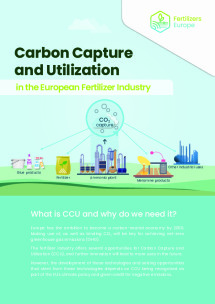
In the high-energy world of fertiliser production, a pioneering plant in Teruel, Aragon is showing how cleaner technologies can reshape a carbon-heavy industry. Set in a once-thriving coal town now emblematic of rural...
This report focuses on the status of sturgeon in EU countries bordering the Baltic Sea and the rivers with known historical sturgeon habitats which drain into it as outlined in the PANEUAP.
Commission Decision of 25 February 2016 setting up a Scientific, Technical and Economic Committee for Fisheries, C(2016) 1084, OJ C 74, 26.2.2016, p. 4–10. The Commission may consult the group on any matter relating...
Aquatic foods comprise animals and plants grown in or harvested from the ocean, lakes and rivers or sustainably farmed. Highly nutritious and with a smaller carbon footprint than land-based crops and livestock, foods ...
Foot-and-mouth disease is a highly contagious viral disease, which affects cattle, swine, sheep, goats and other cloven-hoofed animals. It spreads rapidly amongst these animals, through direct contact between animals,...
The Multiannual Work Programme (MWP) 2025-2029 and Annual Work Programme (AWP) 2025 provides a general overview of the activities programmed on a multiannual basis in order to fulfil the mandate assigned to the Agency...
The European Union's common agricultural policy (CAP) has undergone significant transformations in recent years, with a growing emphasis on environmental sustainability. Evaluating the effectiveness of CAP interventio...
The external dimension of the EU's common fisheries policy provides a framework for the activities of EU vessels fishing beyond European waters and is structured around two types of arrangement: multilateral agreement...
Training and skills enable fishers to be more efficient, resilient, sustainable and work safer. This is important for one of the world’s most dangerous professions. It is also important in making the profession more...
Sturgeon populations in European rivers and coastal waters have undergone a dramatic decline over the last 150 years. In addition to overharvest, the intensive developments of hydropower and river channelization have ...
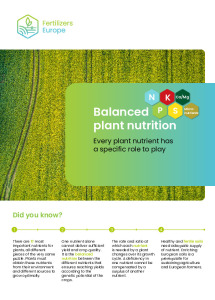
Bio-based fertilizers promise a greener future but face high costs, regulatory gaps and acceptance barriers. Clear definitions, bold policies, and targeted subsidies are key to turning this sustainable solution in...
Short food supply chains are revolutionising agriculture, but success takes more than direct sales. Tailored training and expert advisors play a crucial role in helping farmers navigate new challenges, and build susta...
The study represents the Commission’s commitment, outlined in its 2023 Communication on the functioning of the Common Fisheries Policy (CFP), to address emerging challenges in the sector. It aligns with the Commissi...
Missions are a novelty of the EU research and innovation programme, Horizon Europe. They are a new way of bringing concrete solutions to some of our greatest challenges. Restoring and maintaining soil health is one of...
This study provides an overview of the impact of commodity traders on agricultural markets. It examines the ramifications of financialisation, explores prevailing trends, and confronts the challenges that characterise...