News (28038)
Development
Mar 6, 2024
europarl.europa.eu
At a Glance - Policy Departments Monthly Highlights March 2024 - PE 700.894 - Committee on Agriculture and Rural Development - Committee on Employment and Social Affairs - Subcommittee on Human Rights - Committee on Budgetary Control - Committee on Constitutional Affairs - Committee on Fisheries
Source : © European Union, 2024 - EP
Open
Development
Mar 4, 2024
multimedia.europarl.europa.eu
Video of a committee meeting - Monday, 4 March 2024 - 14:07 - Committee on Development - Subcommittee on Human Rights - Committee on Civil Liberties, Justice and Home Affairs
Length of video : 42'Disclaimer : The interpretation of debates serves to facilitate communication and does not constitute an authentic record of proceedings. Only the original speech or the revised written translation is authentic.Source : © European Union, 2024 - EP
Open
Development
Feb 27, 2024
europarl.europa.eu
Draft agenda - Monday, 4 March 2024 - PE759.708v01-00 - Committee on Development , Committee on Civil Liberties, Justice and Home Affairs , Subcommittee on Human Rights
Source : © European Union, 2024 - EP
Open
Development
Feb 14, 2024
europarl.europa.eu
AMENDMENTS 16 - 160 - Draft opinion on the proposal for a regulation of the European Parliament and of the Council establishing an EU Talent Pool - PE758.952v01-00
AMENDMENTS 16 - 160 - Draft opinion on the proposal for a regulation of the European Parliament and of the Council establishing an EU Talent PoolCommittee on DevelopmentTomas Tobé Source : © European Union, 2024 - EP
Open
Development
Feb 9, 2024
europarl.europa.eu
AMENDMENTS 1 - 102 - Draft report The conclusion of the Partnership Agreement between the European Union, of the one part, and the members of the Organisation of African, Caribbean and Pacific (OACPS) States, of the other part - PE758.877v01-00
AMENDMENTS 1 - 102 - Draft report The conclusion of the Partnership Agreement between the European Union, of the one part, and the members of the Organisation of African, Caribbean and Pacific (OACPS) States, of the other partCommittee on DevelopmentTomas Tobé Source : © European Union, 2024 - EP
Open
Development
Feb 1, 2024
europarl.europa.eu
Briefing - Establishing an EU talent Pool - PE 757.786 - Committee on Civil Liberties, Justice and Home Affairs - Committee on Employment and Social Affairs - Committee on Culture and Education - Committee on Development
The problem definition and problem drivers in the impact assessment (IA) appear to be well-supported by evidence. The IA provides a well-structured analysis of the existing situation and the likelihood for the problem to persist. The IA identifies the initiative's general and specific objectives, which appear to be specific, achievable, relevant and time-bound, but not measurable, as recommended by the Better Regulation Toolbox 'S.M.A.R.T.' criteria. The IA does not define more detailed operational objectives as recommended by the BRG; instead, it provides a list of performance monitoring indicators directly linked to the specific objectives. The IA provides a sufficient range and description of the policy options. It offers an assessment of the options and presents the intervention logic in a clear and transparent manner, where the options are linked to the problem drivers and the specific objectives and their drivers. The IA analyses, in a comprehensive and balanced manner, qualitatively and, where possible, quantitatively, the main expected economic, social and fundamental rights, and environmental impacts, covering specifically effectiveness, efficiency and coherence. The IA explains how the preferred option would contribute to the SDGs; however, additional SDGs (e.g. SDG 5 on gender equality) should have been examined. The analysis of impacts on third and developing countries would have benefited from more attention, given the strong external dimension of the proposal. The IA provides a comprehensive summary of the preferred option's (PO2) costs and benefits for the affected stakeholder groups. It is transparent about data uncertainties and assumptions. Stakeholders were widely consulted and their views were taken into account. The preferred option enjoys broad stakeholder support, with any divergent views sufficiently presented in the dedicated annex of the IA. Overall, the annex on stakeholder consultation appears to be very informative and comprehensive; however, the feedback from this consultation strategy could have been better reflected in the IA, particularly regarding the available policy options and their potential impacts. A SME test was carried out. However, it appears that no targeted SME consultation was conducted. The Commission made efforts to take the RSB's comments into account, but some weaknesses remain (for example, as regards the description of the specific objectives in S.M.A.R.T.er terms, and a more in-depth analysis of the impacts on third and developing countries).Source : © European Union, 2024 - EP
Open
Development
Jan 31, 2024
europarl.europa.eu
Study - Enhancing the protection of human rights defenders (HRDs): Facilitating access to the EU and supporting HRDs from third countries - PE 754.445 - Subcommittee on Human Rights
This study provides a comprehensive exploration of measures aimed at facilitating access to and expanding support for human rights defenders (HRDs) in the European Union (EU). Its introduction deals with the fundamental issue of defining HRDs which, in turn, will enable visa, borders and migration officers to apply the various recommendations here proposed. The subsequent section delves into the EU’s Visa Code and Handbook, proposing substantial changes to accommodate the needs of HRDs seeking entry and short stays in the EU. For longer stays, the study examines available options within the existing legal migration acquis and possibilities offered by the Temporary Protection Directive. It also proposes a self-standing proposal for a Directive that aims to deal with HRDs’ extended stays in the EU. Socio-economic assistance for HRDs is then discussed by proposing specific possibilities for additional measures, resources and policies at the EU level. The impact of digitalisation and EU databases on HRDs is also examined. Lastly, it presents recommendations categorised as soft-law and hard-law, providing a robust framework to safeguard HRDs and facilitate their access to the EU.Source : © European Union, 2024 - EP
Open
Development
Jan 29, 2024
europarl.europa.eu
Opinion on the Interim report on the conclusion of the Voluntary Partnership Agreement between the European Union and the Republic of Cte dIvoire on forest law enforcement, governance and trade in timber products to the European Union (FLEGT) - PE758.740v01-00
Opinion on the Interim report on the conclusion of the Voluntary Partnership Agreement between the European Union and the Republic of Côte d’Ivoire on forest law enforcement, governance and trade in timber products to the European Union (FLEGT)Committee on DevelopmentCarlos Zorrinho Source : © European Union, 2024 - EP
Open
Development
Jan 25, 2024
europarl.europa.eu
OPINION on discharge in respect of the implementation of the general budget of the European Union for the financial year 2022, section III - Commission - PE756.272v02-00
OPINION on discharge in respect of the implementation of the general budget of the European Union for the financial year 2022, section III - CommissionCommittee on DevelopmentAntoni Comín i Oliveres Source : © European Union, 2024 - EP
Open
Development
Jan 25, 2024
europarl.europa.eu
OPINION on discharge in respect of the implementation of the general budget of the eighth, ninth, tenth and eleventh European Development Funds for the financial year 2022 - PE756.271v03-00
OPINION on discharge in respect of the implementation of the general budget of the eighth, ninth, tenth and eleventh European Development Funds for the financial year 2022Committee on DevelopmentAntoni Comín i Oliveres Source : © European Union, 2024 - EP
Open
Source : © European Union, 2024 - EP
Open
Development
Dec 12, 2023
europarl.europa.eu
Missions - DEVE, LIBE and DROI ad-hoc delegation to the UN Global Refugee Forum - 13-12-2023 - Committee on Development - Committee on Civil Liberties, Justice and Home Affairs - Subcommittee on Human Rights
The Committees on Development (DEVE) and on Civil Liberties, Justice and Home Affairs (LIBE), as well as the Subcommittee on Human Rights (DROI) and the Committee for are sending a delegation to the United Nations Global Refugee Forum in Geneva from 13 to 15 December 2023. The second Global Refugee Forum will provide an opportunity to build on the significant progress made by governments and other stakeholders towards the implementation of the pledges and initiatives announced since 2019. Vice-president Marc Angel will participate in the Forum on behalf of the EP President MEPs taking part in the delegation will evaluate the role of EU action on refugee and migration situations in its internal and external policies, and in its three faceted capacity of host, partner and donor. Besides, they will liaise with other EU institutions, member countries as well as third countries, in particular those hosting large numbers of refugees and migrants, and civil society.Location : Geneva, SwitzerlandSource : © European Union, 2023 - EP
Open
Development
Dec 8, 2023
europarl.europa.eu
OPINION on the proposal for a Council Decision on the conclusion, on behalf of the European Union, of the Economic Partnership Agreement between the Republic of Kenya, Member of the East African Community of the one part, and the European Union of the other Part - PE756.189v02-00
OPINION on the proposal for a Council Decision on the conclusion, on behalf of the European Union, of the Economic Partnership Agreement between the Republic of Kenya, Member of the East African Community of the one part, and the European Union of the other PartCommittee on DevelopmentTomas Tobé Source : © European Union, 2023 - EP
Open
Development
Dec 8, 2023
europarl.europa.eu
OPINION on the proposal for a Council decision on the conclusion, on behalf of the Union, of the Voluntary Partnership Agreement between the European Union and the Republic of Cte dIvoire on forest law enforcement, governance and trade in timber and timber products to the European Union (FLEGT) - PE756.017v02-00
OPINION on the proposal for a Council decision on the conclusion, on behalf of the Union, of the Voluntary Partnership Agreement between the European Union and the Republic of Côte d’Ivoire on forest law enforcement, governance and trade in timber and timber products to the European Union (FLEGT)Committee on DevelopmentCarlos Zorrinho Source : © European Union, 2023 - EP
Open
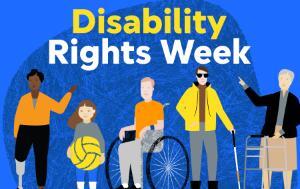
The European Parliament is committed to ensure that all persons with disabilities can live an independent life and be fully integrated into society. In order to analyse existing initiatives to protect and empower people with disabilities, and to reflect on challenges ahead and prepare for future activities, Parliament will hold its first Disability Rights Week. Many committees will be voting, debating and holding events regarding disability policies. Detailed activities below:Debates: AGRI: Discussion with Benoît Ceysens, director of "Ferme Nos Pilifs" DEVE: Debate on "Access to education and training for persons with disabilities in developing countries" EMPL: Discussion on the European Disability Card and European Parking Card & Presentation of the special report on "Supporting people with disabilities" by the European Court of Auditors TRAN: Discussion on existing barriers in the field of transport and tourism for people with disabilities DROI: Exchange of views on the rights of persons with disability in conflict and post-conflict situation Events: PETI: Annual workshop on the rights of persons with disabilities EMPL-FEMM: Hearing "Harmful practices in the EU towards women and girls with disabilities" EMPL: Interparliamentary committee meeting on the participation of persons with disabilities in the electoral process Vote: IMCO: Vote on the opinion on the proposal for the European Disability Card and the European Parking Card Location : European Parliament, Brussels Draft Programme of the first disability rights weekEvents taking place during the Disability Rights week 28 Nov. 2023 morning - AGRI Committee - Exchange of views about the inclusion of persons with disabilities in the agricultural sector. 28 Nov. 2023 from 16.30 - DEVE Committee - Exchange of views on the rights of persons with disability in conflict and post-conflict situation - Link to the webstreaming 29 Nov. 2023 from 9:00 - PETI Committee - Annual workshop on the rights of persons with disabilities followed by debates on petitions 29 Nov 2023 from 14:30 - joint EMPL-FEMM hearing on 'Harmful practices in the EU towards women and girls with disabilities' 30 Nov. 2023 morning - EMPL committee - Debate on the European Disability Card and European Parking Card 30 Nov. 2023 morning - EMPL committee - presentation of the special report 'Supporting people with disabilities' - European Court of Auditors 30 Nov. 2023 from 10:45 - TRAN Committe - Exchange of views on the draft opinion & amendments on the European Disability Card and European Parking Card and discussion on existing barriers in the field of transport and tourism for people with disabilities 30 Nov. 2023 from 11:30 - DROI sub-committee - Exchange of views on the rights of persons with disability in conflict and post-conflict situation 4 Dec. 2023 from 16:30 - interparliamentary committee meeting on 'the participation of persons with disabilities in the electoral process' 4 Dec. 2023 from 18:15 - IMCO Committee - Vote on the opinion on the proposal for the European Disability Card and the European Parking Card, during the Committee.Background information Study on the 'Analysis of the European Disability Card' - Nov 2023 - EMPL Committee Study on 'Targeted measures for persons with disabilities to cope with the cost-of-living crisis' - Nov 2023 - PETI committee Political participation of people with disabilities in the EU - May 2023 Understanding EU policies for people with disabilities - Dec. 2022 Towards equal rights for persons with disabilities - Dec. 2022Source : © European Union, 2023 - EP
Open
Development
Nov 22, 2023
europarl.europa.eu
Briefing - Developing countries' energy needs and priorities under a sustainable development perspective: The specific case of Africa and green hydrogen - PE 754.438 - Committee on Development
Africa is the continent most affected by energy poverty, with more than 40 % of its population lacking access to electricity. This is in spite of an extremely high potential for renewable energy generation and an increasing number of fossil fuel developments on the continent. Through its development cooperation programmes, the EU has committed significant funds to reduce energy poverty in its partner countries in Africa. These programmes aim to help achieve the Sustainable Development Goal 7, which commits the international community to ensure universal access to affordable, reliable, sustainable and modern energy by 2030. This report takes stock of these efforts by investigating the major challenges to universal access to energy in Africa and the efficacy of the EU programmes trying to overcome them. It also examines how these efforts may interact with the external aspects of the EU’s Green Hydrogen strategy, which foresees significant imports of green hydrogen from African partners by 2030. The report analyses the strategy from the perspective of the Policy Coherence for Development.Source : © European Union, 2023 - EP
Open
Development
Oct 26, 2023
europarl.europa.eu
OPINION on shaping the EUs position on the UN binding instrument on business and human rights, in particular on access to remedy and the protection of victims - PE751.900v03-00
OPINION on shaping the EU’s position on the UN binding instrument on business and human rights, in particular on access to remedy and the protection of victimsCommittee on DevelopmentMiguel Urbán Crespo Source : © European Union, 2023 - EP
Open
Development
Oct 1, 2023
europarl.europa.eu
Study - Strengthening the democracy clause in EU agreements and instruments: Exploring election conditionality - PE 702.606 - Subcommittee on Human Rights
This briefing considers where electoral conditionality could be included in European Union (EU) relations with third countries and offers three viable options, namely as part of: direct budget support; General Scheme of Preferences Plus (GSP+); and the Neighbourhood, Development and International Cooperation Instrument-Global Europe (NDICI-GE). In all three cases, not only would electoral conditionality incentivise partner countries to adhere to electoral recommendations, but also encourage them to invite international observer organisations to their elections. Within GSP/GSP+, such observation can be understood as a monitoring tool for implementing human rights conventions within beneficiary countries. Moreover, a newly designed thematic regional NDICI-GE instrument could make EU funding conditional on fulfilling recommendations from election observers. The briefing concludes with suggestions on how to enhance the practice of election observation as a foreign policy tool, with the aim of strengthening electoral integrity.Source : © European Union, 2023 - EP
Open
Development
Sep 21, 2023
europarl.europa.eu
OPINION on the draft Council decision on the conclusion, on behalf of the Union, of the Protocol on the implementation of the Fisheries Partnership Agreement between the European Community on the one hand, and the Republic of Kiribati, on the other (2023-2028) - PE752.754v02-00
OPINION on the draft Council decision on the conclusion, on behalf of the Union, of the Protocol on the implementation of the Fisheries Partnership Agreement between the European Community on the one hand, and the Republic of Kiribati, on the other (2023-2028)Committee on DevelopmentBeata Kempa Source : © European Union, 2023 - EP
Open
Development
Sep 20, 2023
europarl.europa.eu
OPINION on the draft Council decision on the conclusion, on behalf of the European Union, and provisional application of a Sustainable Fisheries Partnership Agreement between the European Union and the Republic of Madagascar and the Implementing Protocol thereto (2023-2027) - PE752.787v02-00
OPINION on the draft Council decision on the conclusion, on behalf of the European Union, and provisional application of a Sustainable Fisheries Partnership Agreement between the European Union and the Republic of Madagascar and the Implementing Protocol thereto (2023-2027)Committee on DevelopmentCaroline Roose Source : © European Union, 2023 - EP
Open
Development
Jul 4, 2023
eulatnetwork.org
Guatemala 2023 elections: EU-LAT Network expresses concern about suspension of first round of voting a new step towards closing civic and democratic space?
La Red EU-LAT expresa su profunda preocupación por la integridad del proceso electoral en Guatemala, tras la suspensión arbitraria de la oficialización de los resultados de votación de la primera vuelta de las Elecciones Generales por parte de la Corte de Constitucionalidad (CC). De acuerdo con la declaración de la Misión de Observación Electoral de […]
Open
Development
Jul 4, 2023
europarl.europa.eu
OPINION on the proposal for a regulation of the European Parliament and of the Council on prohibiting products made with forced labour on the Union market - PE742.681v02-00
OPINION on the proposal for a regulation of the European Parliament and of the Council on prohibiting products made with forced labour on the Union marketCommittee on DevelopmentIlan De Basso Source : © European Union, 2023 - EP
Open
Development
Jun 30, 2023
eulatnetwork.org
Latin America and the Caribbean and the European Union: Towards a Real Renewed Political Partnership. Civil society proposals to strengthen the bi-regional relationship
Latin America and the Caribbean and the European Union: towards a real renewed political partnership. Civil society proposals to strengthen the bi-regional relationship Document by the EU-LAC Working Group for the EU’s New Agenda towards Latin America and the Caribbean and its birregional strategy. In the current context of global transformation, overlapping crises and gradual […]
Open
Development
Jun 29, 2023
multimedia.europarl.europa.eu
Video of a committee meeting - Thursday, 29 June 2023 - 08:59 - Committee on Development - Committee on Civil Liberties, Justice and Home Affairs - Subcommittee on Human Rights
Length of video : 106'Disclaimer : The interpretation of debates serves to facilitate communication and does not constitute an authentic record of proceedings. Only the original speech or the revised written translation is authentic.Source : © European Union, 2023 - EP
Open
Development
Jun 26, 2023
europarl.europa.eu
Briefing - The UN High Level Political Forum on Sustainable Development 10-19 July 2023, New York - PE 740.088 - Committee on the Environment, Public Health and Food Safety - Committee on Development
Midway of the 2030 Agenda for Sustainable Development, the High-Level Political Forum 2023 marks a pivotal point in the achievement of the Sustainable Development Goals (SDGs). The impact of the multiple crises of the past years, as well as the interlinkages and synergies of the SDGs present both challenges and opportunities for a systemic approach towards our common objectives. For the global community not to lose the progress in this global decade of action, there is a need for the EU to take the lead, both in domestic policies and international cooperation. Conclusions from the Eurostat Monitoring Report 2023, Sustainable Development Report 2022 and civil society analysis point to the EU’s progress on social-economic SDGs, and notes insufficient progress on environmental objectives and global partnerships. Thus, there is a strong need for policy coherence, financing frameworks and political will to ensure the implementation of the 2030 Agenda and the objectives set out in the Paris Climate Agreement.Source : © European Union, 2023 - EP
Open
Human Rights
Jun 11, 2023
OpenSociety
Debt service payments have more than doubled since 2011 in the world's poorest nations. This means they cannot spend on health and education and break cycles of poverty, let alone make needed investments to defend against climate change. https://t.co/BTArLJs3Kb
Open
Human Rights
Jun 11, 2023
OpenSociety
From the loss of reproductive rights in the U.S. to the reimposition of Taliban rule in Afghanistan, decades of hard-won progress in gender justice and equality are being pulled back. Our @OpenNatalie on how to make a better, safer, and more just world: https://t.co/ywiIdQkZb2 https://t.co/1ArmBSxtQB
Open
Human Rights
Jun 10, 2023
OpenSociety
Our founder George Soros has built his philanthropy on the belief that no one has a monopoly on truth. That is why we have launched a new collaborative that introduces, subjects to skepticism and critique, and disseminates ideas of all kinds. https://t.co/n62nASaLaL
Open
Human Rights
Jun 10, 2023
OpenSociety
You may not know the name Norris Henderson, but you should. By fighting for the rights of people harmed by the criminal justice system in the United States, Norris is showing that through collective and steady action we can change communities, and the country. @FIPVOTENOLA https://t.co/wvVnNIXs9a
Open
Human Rights
Jun 4, 2023
OpenSociety
In Lebanons cities, residents face a severe housing shortage, while over 25% of apartments sit empty as places to park capital. To combat this and other urban issues, our grantee @BeirutUrbanLab works to make cities more just, inclusive and sustainable. https://t.co/MPSsqL7Sw4
Open
Human Rights
Jun 3, 2023
OpenSociety
Great piece in @washingtonpost by Achal Prabhala and @vitor_ido on how lifting antiquated trade sanctions against a small island state and tech sharing could hold the key towards pandemic preparedness and vaccine equity @TheIndPanel @Economy4Health @who https://t.co/xGWrJGC6rq
Open
Development
Jun 1, 2023
europarl.europa.eu
OPINION on the proposal for a regulation of the European Parliament and of the Council on the sustainable use of plant protection products and amending Regulation (EU) 2021/2115 - PE745.174v03-00
OPINION on the proposal for a regulation of the European Parliament and of the Council on the sustainable use of plant protection products and amending Regulation (EU) 2021/2115Committee on DevelopmentMichèle Rivasi Source : © European Union, 2023 - EP
Open
Human Rights
May 28, 2023
OpenSociety
The Caribbean is among the most sensitive regions to climate-related disasters on the planet. How a regional treaty seeks to protect environmental defenders in their fight for climate justice and ensure that vulnerable communities have a voice: https://t.co/v5c08yLrHk
Open
Human Rights
May 23, 2023
OpenSociety
The end of #Title42 should have been a cause for celebration, unfortunately, what we have witnessed these past few days is a continuation of policies that are rooted in violence & abuse instead of compassion.@dpaulobrien shares this from Senda Shelterhttps://t.co/SslJXkpwYw
Open
Human Rights
May 23, 2023
OpenSociety
Roma inclusion is an economic and democratic win for the EU. With demographic trends threatening economic growth, the EU should break down barriers and foster the potential of this multilingual, entrepreneurial workforce. https://t.co/VHMndAHdAn @romaeducation @ciprian_necul
Open
Development
May 23, 2023
EP_Development
LIVE NOW Debate ongoing with @EP_Development and @EP_ForeignAff MEPs on the #GlobalGateway initiative Watch here: https://t.co/k0MRzb8j5V
Open
Development
May 23, 2023
EP_Development
By acclamation and as the only candidate nominated, @mercedesbresso has been chosen as the new 2nd Vice-Chair of the @EP_Development
Open
Human Rights
May 22, 2023
ethique-sur-etiquette.org
L 'Obs : Ouverture d'une boutique phmre Shein Paris : Les nouvelles gnrations sont nes avec l'illusion qu'un vtement peut coter 5 euros
L'enseigne chinoise, régulièrement dénoncée pour son impact écologique et social, ouvre à partir de ce vendredi une boutique éphémère à Paris, dans le Marais. Analyse avec Nayla Ajaltouni, coordinatrice du collectif Ethique sur l'Etiquette. - Soutenir les travailleurs / Actualités , Article en bloc actualité colonne droite homepage, La presse en parle
Open
Human Rights
May 21, 2023
OpenSociety
The #G7 leaders have acted decisively on Ukraine with welcome new commitments. But Hiroshima has been a another missed opportunitywe are still waiting for the richest countries in the world to take the action so desperately needed on climate financing and on global debt.
Open
Human Rights
May 20, 2023
OpenSociety
More than 60 US citizens and legal permanent residents are in #WrongfulDetention abroad.Ikechukwu Uzoma (@iykepfs) and Mooya Nyaundi (@mooyalynn): the US can not only work to free #detainees, but also lower the risk of hostage-taking in the first place.https://t.co/PVBxAiPqIF
Open
Human Rights
May 19, 2023
OpenSociety
Myanmars military has imported arms worth at least $1bn since seizing power in February 2021 https://t.co/6vkVvCTnzQ https://t.co/pPbNMQh47F
Open
Human Rights
May 18, 2023
OpenSociety
Countries that have decriminalized homosexuality have 4.5 times higher rates of foreign direct investment than countries that criminalize consensual same-sex relationships, @LeeBadgett writes in the context of @EBRD's annual meeting in Uzbekistan. https://t.co/tKqSLyMkql
Open
Development
May 17, 2023
EURightsAgency
Do you know what the #DublinProcedure is? It's the cornerstone of the Common European Asylum System. It determines which country is responsible for examining the application of an asylum seeker.Watch & #GetitRight to learn more about how it works & its key principles. https://t.co/geGsCWNs52
Open
Development
May 17, 2023
EURightsAgency
Proud of stand alongside #DiplomatsForEquality on #IDAHOBIT2023. United in diversity.See joint statement:https://t.co/5F9afSKOgb https://t.co/BKsjNB3oC0
Open
Development
May 17, 2023
EBRD
Watch it LIVE now! https://t.co/XcR6VmmOj9
Open
Development
May 17, 2023
EBRD
Watch the Opening Session of the Board of Governors today LIVE from Samarkand #EBRDam https://t.co/YykJFotrlL
Open
Human Rights
May 16, 2023
OpenSociety
In 2022, we recorded the highest numbers of global executions since 2017. But, as four more countries join the global trend of total abolition of the death penalty, we have never felt more hopeful that it can become a thing of the past. Our report https://t.co/tPrb63lxc2
Open
Development
May 16, 2023
EURightsAgency
On 16 May 1944 Roma at Auschwitz rebelled against SS guards. As a result, no Roma or Sinti died in the gas chambers that day.On #RomaniResistanceDay #WeRemember this act of bravery. May it inspire efforts to combat antigypsyism, antisemitism & all forms of discrimination! https://t.co/CRRQGj8I5E
Open
Development
May 16, 2023
EBRD
That was fascinating! Thank you to everyone for taking part. https://t.co/TuXSM8BmRT
Open
Development
May 16, 2023
EBRD
Well be starting our discussion soon! Send your questions #EBRDrep https://t.co/BJJN92dhoX
Open
Development
May 16, 2023
EBRD
Regional Economic Prospects 2023 https://t.co/5uV8V1feOL
Open
Development
May 16, 2023
EURightsAgency
Congratulations, Franois!Looking forward to continuing our cooperation on protecting #FundamentalRights. https://t.co/8LFHfZ3y8f
Open
Development
May 16, 2023
EURightsAgency
#CouncilOfEuropeSummit starts today.Stay tuned:https://t.co/FhO9iIOhwe https://t.co/HS9kZpuGX6
Open
Development
May 16, 2023
EURightsAgency
On the eve of the #CouncilOfEuropeSummit, @PACE_News launched today the #VigdsPrize in Reykjavik This will reward outstanding initiatives promoting the empowerment of women in all their diversity & #genderequality. More info https://t.co/mwX4iqbNW1 https://t.co/FHkX2GNQqw
Open
Human Rights
May 15, 2023
OpenSociety
Rumors that I had a heart attack are completely false. I am alive and healthy.
Open
Development
May 15, 2023
europarl.europa.eu
OPINION on the draft Council decision on the conclusion of the Protocol implementing the Sustainable Fisheries Partnership Agreement between the European Union and the Republic of Mauritius (2022-2026) - PE746.716v02-00
OPINION on the draft Council decision on the conclusion of the Protocol implementing the Sustainable Fisheries Partnership Agreement between the European Union and the Republic of Mauritius (2022-2026)Committee on DevelopmentStéphane Bijoux Source : © European Union, 2023 - EP
Open
Human Rights
May 15, 2023
OpenSociety
The International Criminal Court has issued an arrest warrant for Russian President Vladimir Putin and Childrens Rights Commissioner Maria Lvova-Belova for their role in the deportations, but there is still no mechanism to bring the children back to their families.
Open
Human Rights
May 15, 2023
OpenSociety
Civil society organizations in Ukraine have been tracking the deportationsamong other potential war crimesand helping parents trace their childrens location, in some cases all the way into Russia. To learn more, follow @zminaUkraine, @IPHR, @RchrSev, and @truth_hounds.
Open
Development
May 15, 2023
EURightsAgency
The #CouncilOfEuropeSummit, only the 4th in the organisation's history, will take place in Reykjavik on 16-17 May. Representatives from 46 countries will come together to decide on the Council of Europe's work #ForABetterEurope.Special page: https://t.co/yqoyCpFXgI https://t.co/p4UtkKK6E5
Open
Development
May 15, 2023
EBRD
It is my huge pleasure and honour to be on the same flight to Samarkand with the EBRD's President Odile Renaud-Basso on our way to the EBRDs Annual Meeting in Uzbekistan I am looking forward to the buzz and action of the EBRDs Annual Meeting! https://t.co/9JHbpTDEZd
Open
Development
May 14, 2023
europarl.europa.eu
In-Depth Analysis - Assessment of the implementation of the human rights clause in international and sectoral agreements - PE 702.586 - Subcommittee on Human Rights
This study examines the EU’s policy on human rights clauses in its international agreements since 2014. It focuses on the inclusion of human rights clauses in framework agreements, in line with the 2009 ‘Common Approach’, and how these clauses apply to more ‘specific’ agreements between the parties in sectoral agreements. It also looks at human rights clauses in sectoral agreements, especially sustainable fisheries partnership agreements and financing agreements, contrasting these with timber and selected investment agreements. The study emphasizes the importance of proper monitoring and enforcement to ensure compliance with human rights norms. It makes several recommendations including ensuring consistent coverage of human rights clauses across all types of agreements, clarifying their scope and giving consideration to making specific reference to newer human rights, tailoring benchmarks to individual countries, expanding the remit of Domestic Advisory Groups, and exploring additional avenues for reporting potential violations, similar to the Single Entry Point mechanism. It also recommends expanding the ‘general exceptions’ routinely included in trade and investment agreements to allow parties to take measures, not otherwise permitted by the agreement, to implement their human rights obligations.Source : © European Union, 2023 - EP
Open
Development
May 14, 2023
EBRD
The Sun- kinetic sculpture by @Unus_Safardiar today on @EBRD social media. He is the only living Uzbek/British sculptor sold at the largest contemporary art auction houses in the world. Make sure to visit it at the #ebrdAM 2023 in #samarkand https://t.co/QKiBUqlSjb
Open
Human Rights
May 13, 2023
OpenSociety
Unions and other strategies that build worker power are not just vital to democracythey are also central to many issues philanthropy cares about, including reducing economic inequality, addressing health disparities, and protecting voting rights. https://t.co/B9kxgDEiG8
Open
Human Rights
May 12, 2023
OpenSociety
A broken model of political economy has prevailed over the past 40 years. Open Society President @malloch_brown argues @UMDPublicPolicy for a new political economy that takes the world beyond the neoliberal era to greater justice and stability. https://t.co/l6hO3bJd87
Open
Human Rights
May 12, 2023
OpenSociety
Great news! @EP_SingleMarket & @EP_Justice voted in favor of a more people-first approach to the #AIAct by banning: AI systems used for biometric surveillance emotion recognitionpredictive policing@edri's statement on this important win. https://t.co/S8y2c20NMb
Open
Human Rights
May 11, 2023
OpenSociety
"International organizations and host countries cannot fully benefit from the skills and expertise that refugees bring if they do not give them a seat at the table."Read more from Jonas Ndayisenga Proud-Lion, co-founder & CEO of @RefugeeUmoja @Newsweek https://t.co/N69TauYdnZ
Open
Development
May 11, 2023
EBRD
See you in just a few days in Samarkand! Will you be joining us there?#EBRDam https://t.co/HlVWYVEdup
Open
Development
May 11, 2023
EP_HumanRights
On Thursday, the @Europarl_EN adopted three resolutions on the respect for human rights in Algeria, Belarus and Myanmar.Press release: https://t.co/mZt6jtYhKR
Open
Human Rights
May 10, 2023
OpenSociety
Naloxone is one of the best ways to reduce opioid overdose deaths. But scarcity and high prices have made the medication unavailable to many in need. Our grantee @RemedyAlliance has been working to make it more accessible: https://t.co/dCH3YuA28Y https://t.co/N9VI898Euk
Open
Human Rights
May 10, 2023
OpenSociety
At @OpenSociety we're proud to support#AAPI NGOs. They reach & engage first gen immigrants like me, get us engaged in civic life, enriching our increasingly multiracial & ethnic democracy. When Asian women lead, the work gets done! RSVP: https://t.co/juJZogCJEt #AAPI #AANHPI https://t.co/KFUqQvHSFI
Open
Human Rights
May 9, 2023
OpenSociety
Watch Live Now: The relationship among capitalism, democracy, and international order has long been fraught. Open Society President @malloch_brown argues for a new political economy that brings greater justice and stability @umdpublicpolicy: https://t.co/l6hO3bJd87
Open
Development
May 9, 2023
EBRD
Watch our @BJavorcik tomorrow at 3pm UK time! https://t.co/ShBMHquY1m
Open
Human Rights
May 9, 2023
OpenSociety
Today, on #EuropeDay, we normally celebrate peace and unity. May 9th marks the anniversary of the Schuman Declaration that set out the idea for new political cooperation, making war between Europes nations unthinkable. But Europe is not at peace. https://t.co/SCiAtbk6E9
Open
Human Rights
May 9, 2023
OpenSociety
We woke upto a new reality of killings, of bodies strewn on the streets, of artillery bombardment and burning buildings. We are now in a desperate period of fear, trauma, andfor those who canexodus. @Halayalkarib of grantee @Sihanet writes from Sudan https://t.co/1gkfNNKO4H
Open
Human Rights
May 9, 2023
OpenSociety
This is the first U.S. federally-funded study, led by our grantee @Brown_SPH, of overdose prevention centers. These centers have been shown to save lives across the world, including hundreds at our partner @_OnPointNYCs two sites in New York City. https://t.co/nV178hTG0Y
Open
Human Rights
May 8, 2023
OpenSociety
Tomorrow at 3pm EDT: The relationship among capitalism, democracy, and international order has long been fraught. Open Society President @malloch_brown argues for a new political economy that brings greater justice and stability @umdpublicpolicy. Watch: https://t.co/l6hO3bJd87
Open
Human Rights
May 8, 2023
OpenSociety
TOMORROW @ 18:30 CET: Join us on #EuropeDay at @BozarBrussels to discuss whether Europe can provide solutions to the various crises facing the world today. With our @TTsertsvadze, @porcarorama, @lallakhr, @shada_islam, @anunade, @r_t_oc & more https://t.co/B18ZBUOwcv
Open
Development
May 8, 2023
EURightsAgency
FRA's J Goodey & N Romain and MEP @lukasmandl laid a wreath to honour the survivors and remember the victims of the #Mauthausen camp.78 years since the liberation, hate & intolerance are again spreading through our societies.We stay committed to #NeverForget #NeverAgain https://t.co/Efy2QZWb7k
Open
Human Rights
May 6, 2023
OpenSociety
Our founder George Soros built his philanthropy on the belief that no one has a monopoly on truth. That is why we have launched a new collaborative that introduces, subjects to skepticism and critique, and disseminates ideas of all kinds. https://t.co/n62nASaLaL
Open
Human Rights
May 6, 2023
OpenSociety
The groups have joined forces under the theme: "The civilian front for ending the war and restoring democracy." The signatories to the resolution have been drawn from political parties, civic society, trade unions, academia and media freedom. https://t.co/GRjJ2L2V6S
Open
Human Rights
May 5, 2023
OpenSociety
How many thousands of children have died while waiting to get this vaccine? #FairAccess https://t.co/OoywVXrR1R
Open